
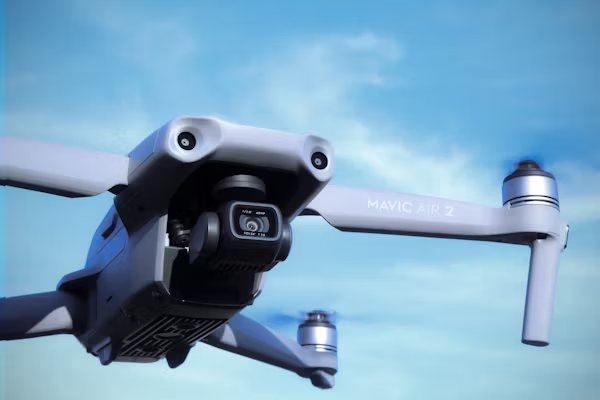
The military and defense industry is undergoing a rapid transformation in 2025. Emerging technologies like autonomous drones, unmanned submarines, and advanced robotics are not only reshaping combat strategies but also redefining national security and global power dynamics.
These advancements bring both opportunities and challenges as governments, defense organizations, and innovators push the boundaries of technology.
The Driving Forces Behind Military Tech Evolution
Several factors explain why defense tech is evolving faster than ever:
- Geopolitical tensions → Nations are racing to modernize their defense systems.
- AI & automation → Machine learning enables smarter, faster, and more autonomous systems.
- Efficiency & cost savings → Unmanned systems reduce risks and long-term costs.
- Cyber & space domains → Warfare is expanding beyond land, air, and sea.
Autonomous Drones | The Sky’s Strategic Advantage
Autonomous drones have become a core element of modern military operations.
Key Features:
- AI-powered navigation and targeting.
- Real-time surveillance and reconnaissance.
- Strike capabilities without risking pilot lives.
Example Uses:
- Border surveillance.
- Counter-terrorism missions.
- Precision strikes in conflict zones.
In 2025, many nations are investing in swarm drone technology, where multiple drones operate together using AI for coordination, making them harder to defend against.
Unmanned Submarines | The Silent Revolution Underwater
The seas are witnessing a new wave of defense innovation with unmanned submarines (UUVs).
Benefits:
- Long-duration underwater surveillance.
- Stealth reconnaissance in contested waters.
- Mine detection and clearance.
- Potential offensive roles in naval combat.
Real-World Developments:
- The U.S., China, and Russia are testing AI-driven autonomous submarines that can patrol without human crews.
- These submarines are being designed to communicate with naval fleets and satellites for real-time intelligence.
Robotics in Modern Warfare
Robotics is reshaping ground operations and battlefield logistics.
Applications Include:
- Unmanned ground vehicles (UGVs): Transporting supplies or detecting explosives.
- Robotic exoskeletons: Enhancing soldier strength and endurance.
- AI-driven combat robots: Capable of reconnaissance or even limited combat roles.
Robotics reduces the human cost of warfare by taking over dangerous or repetitive tasks.
Opportunities and Benefits of Defense Tech Evolution
- Reduced human casualties → Fewer soldiers on the frontlines.
- Faster decision-making → AI analyzes battlefield data in real time.
- Cost efficiency → Long-term savings despite high initial investment.
- Expanded defense domains → Land, sea, air, space, and cyberspace.
Ethical and Security Challenges
While the tech promises advancement, it also raises critical questions:
- Autonomy vs. accountability → Who is responsible if an AI system makes a lethal mistake?
- Cybersecurity risks → Autonomous systems can be hacked or manipulated.
- Escalation risks → Faster decision-making might increase chances of unintended conflict.
- Global arms race → Nations competing for dominance may destabilize global peace.
The Future of Military Technology (2025 & Beyond)
Looking ahead, expect rapid growth in:
- AI-powered swarm systems (drones, UUVs, ground robots).
- Integration of quantum computing for faster defense intelligence.
- Directed-energy weapons (lasers) for drone defense.
- Dual-use tech → Civilian industries like healthcare and logistics adopting military robotics.
The balance between innovation and regulation will shape the trajectory of defense technology.
Final Thoughts
The evolution of military and defense tech is creating a future where autonomous drones, unmanned submarines, and robotics play central roles in global security.
While these technologies bring strategic advantages, they also demand ethical governance and cybersecurity safeguards. Nations that balance innovation with responsibility will lead the way in shaping the defense systems of tomorrow.
FAQs on Military & Defense Tech Evolution
Q1. What are autonomous drones used for in defense?
They provide surveillance, reconnaissance, and precision strikes without risking human pilots.
Q2. How do unmanned submarines benefit navies?
They enhance stealth surveillance, mine detection, and underwater operations.
Q3. Will robots replace human soldiers?
Not entirely. Robotics will support and protect soldiers, reducing human casualties.
Q4. What are the risks of autonomous military tech?
Cybersecurity threats, accountability in lethal decisions, and global arms races.
Q5. What is the biggest trend in defense technology in 2025?
AI-driven autonomous systems, especially swarm drones and UUVs.