
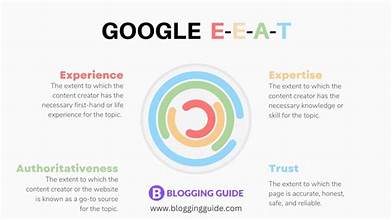
If you’re trying to rank higher on Google in 2025, understanding E-E-A-T is no longer optional—it’s essential. Google uses this framework to evaluate the quality, credibility, and reliability of your content and your website. Whether you’re a blogger, content marketer, or business owner, mastering E-E-A-T can mean the difference between page 10 and page 1. In this guide, we’ll break down what Experience, Expertise, Authoritativeness, and Trustworthiness really mean, and how you can apply them to your SEO strategy to stay ahead of the competition this year.
Google E-E-A-T Explained (And How to Use It in 2025)
In 2025, Google’s search algorithm has become more intelligent than ever—and E-E-A-T is at the core of how content is evaluated for quality. But what exactly does E-E-A-T mean, and how can you use it to improve your rankings?
Let’s break it down.
🔍 What is E-E-A-T?
E-E-A-T stands for:
- Experience
- Expertise
- Authoritativeness
- Trustworthiness
It’s a framework Google uses to assess the quality and credibility of content and its creators—especially for Your Money or Your Life (YMYL) topics like health, finance, and legal content.
🧠 Why Is E-E-A-T Important in 2025?
With the rise of AI-generated content and misinformation, Google has doubled down on rewarding real, high-quality, trustworthy content. E-E-A-T helps Google determine:
- Is the content written by someone who knows the topic from first-hand experience?
- Is the author an expert in their field?
- Is the website a trusted source in its niche?
- Can users trust the accuracy and intent behind the content?
Websites that demonstrate strong E-E-A-T are more likely to rank higher in search results.
✅ E-E-A-T Breakdown (with 2025 Updates)
1. Experience
Google now values first-hand experience more than ever.
✅ Tips to optimize:
- Include personal case studies, screenshots, or examples.
- Share lessons learned or mistakes made.
- Add timestamps (e.g., “Tested in July 2025”) to show content is current.
2. Expertise
Are you qualified to speak on this topic?
✅ Tips to optimize:
- Add an author bio with relevant credentials.
- Mention years of experience or industry achievements.
- Keep content fact-checked and up to date.
3. Authoritativeness
Is your site a go-to source in your niche?
✅ Tips to optimize:
- Earn backlinks from reputable sources.
- Publish consistently valuable content.
- Get quoted or referenced by other experts in your industry.
4. Trustworthiness
Can users trust your content, brand, and website?
✅ Tips to optimize:
- Use HTTPS and fast, secure hosting.
- Display privacy policies, author info, and contact details.
- Avoid exaggerated or misleading headlines.
📈 How to Implement E-E-A-T on Your Site in 2025
- ✅ Add author schema markup to show Google who wrote the content.
- ✅ Use AI responsibly — always review and fact-check AI-generated content.
- ✅ Display social proof like testimonials, reviews, or media mentions.
- ✅ Optimize your About, Team, and Contact pages.
- ✅ Encourage Google Business Profile reviews if you’re a local business.
🧩 Bonus: E-E-A-T and Helpful Content System
Google’s Helpful Content System works closely with E-E-A-T. If your site regularly publishes content with no real value or originality, you risk being demoted in rankings—regardless of keyword usage.
Focus on people-first content that answers real questions with real insights.